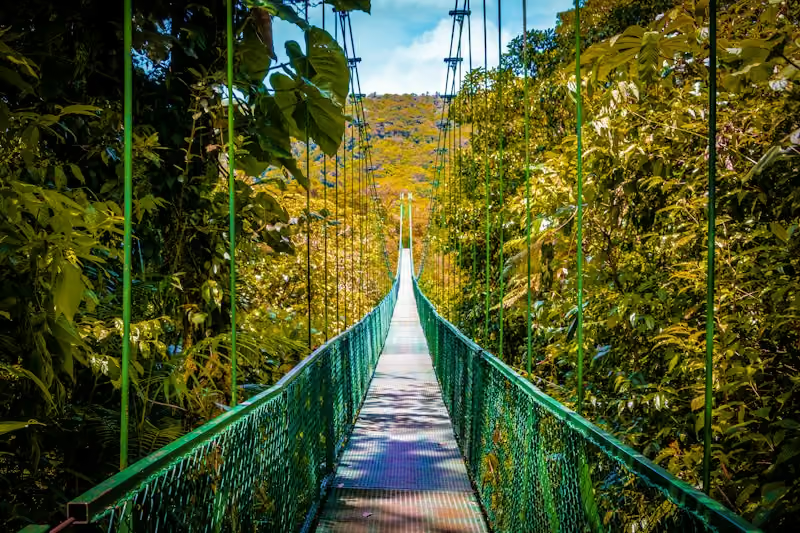
Monteverde sits in the middle of the mountainous area of Puntarenas, and that becomes clear as soon as you start climbing. Most of the road from the Central Valley is paved highway, but the final stretch brings gravel, grades, and sharp curves that do call for attention. Before heading to the Cloud Forest, take a moment to think about the full route, the time of year, and the vehicle you'll be driving.
Why Monteverde demands more from the vehicle
The Cloud Forest sits in an area where the road calls for more than an urban route or a fully paved highway. The challenge isn't only reaching the region, but handling the final ascent well, where both the surface and the shape of the road change. You may find stretches of gravel and sharp curves that call for more vehicle control, especially when the terrain is wet. Because of this, in this destination the choice of vehicle carries more weight than in places connected only by main highway. Ground clearance and the ability to keep traction become key factors during the last few kilometers.
How to get there by car from the Central Valley
From the Central Valley, the road to Monteverde combines paved highway with a final approach that gets more demanding as you get closer to the mountainous area. Depending on the route you take, the ascent can go through Sardinal or Guacimal. You'll drive on paved roads for most of the trip, but don't get too comfortable: conditions change near Monteverde, where gravel and sharper curves appear. Before leaving, it helps to review the full route to your lodging, since the condition of that last stretch is what should determine which vehicle you take.
What the final stretch to Monteverde is like
That final stretch includes gravel and sharp curves during the ascent from Sardinal or Guacimal, and calls for driving at a speed suited to the surface, paying attention to how the terrain keeps changing. Gravel offers less traction than pavement, especially on grades or curves, and that traction varies with the weather. During the rainy season—from May to November—the road can become more slippery. For that reason, consider the condition of this final stretch as a central factor in your trip, even if most of the route before it was straightforward.
Which vehicle is best for getting to Monteverde
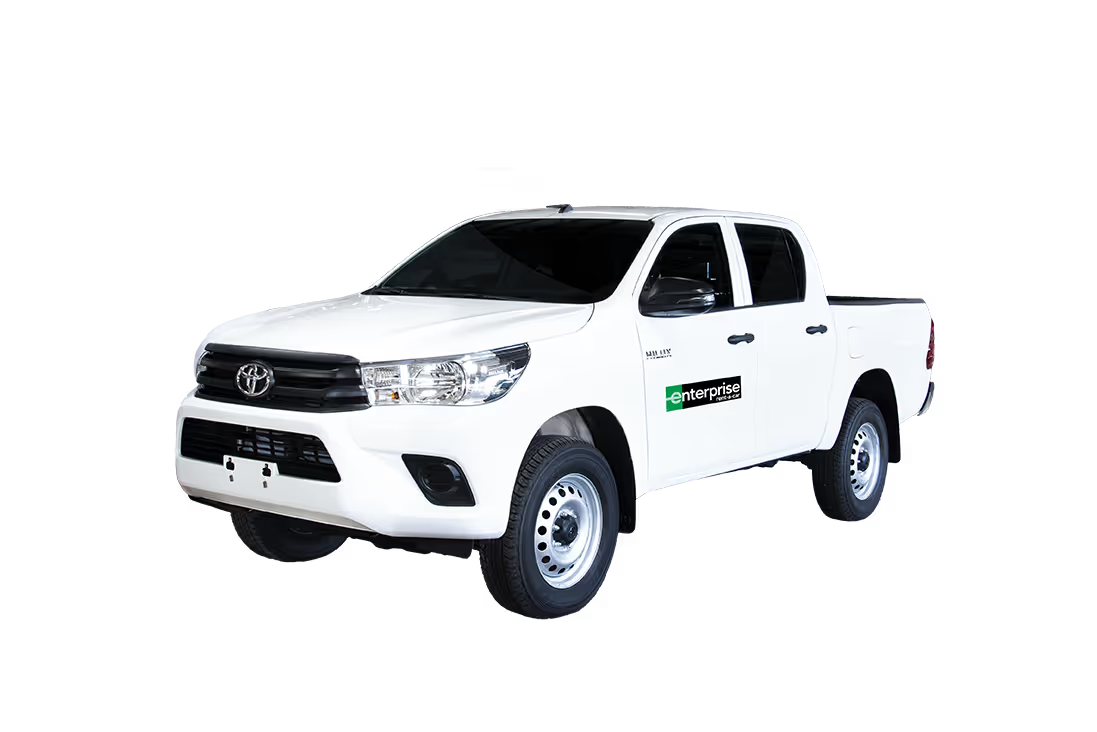
For this trip, a 4x4 is the option we recommend without hesitation: the access combines gravel, sharp curves, grades, and moments of low traction, all together. Four-wheel drive helps you keep control when the terrain is wet or loose, something that matters even more during the rainy season. This doesn't mean you need 4x4 for every meter of the trip, but the vehicle should be ready for the most demanding part of the route. If you're traveling between May and November, or plan to explore additional secondary roads around Monteverde, traction becomes an even more important factor.
What to expect from the trip and the rainy season
The trip changes character as you get closer to the mountains: paved highway gives way to a stretch where curves, gravel, and grades call for more careful driving. Between May and November, rain can reduce traction and alter road conditions, so it's a good idea to build in extra time when planning your trip. As a reference, plan on 3 to 4 hours from San José, keeping in mind that the final gravel stretch is covered more slowly than an equivalent distance on pavement. More than the distance in kilometers, what should weigh into your planning is the real condition of the road.
To plan your arrival in Monteverde well, review the final ascent and the time of year, compare the features of the vehicle available, and always keep in mind that rain can change how the road behaves from one day to the next.
Have any questions left?
These are the most common questions related to this topic. If you have a specific question, feel free to contact us: our team will be happy to help.
Not always. It depends on your itinerary: if you are sticking to paved roads, an SUV or even a sedan will do. A 4x4 is recommended if your plans include gravel or mountain roads, or if you are traveling during the rainy season (May to November).
It depends on your destination and road conditions: it takes about 4 hours to reach Liberia/Guanacaste via paved roads, while the trip to Monteverde takes 3 to 4 hours, including a final stretch of gravel road that requires slower driving.